Glass does not wear out. It gets marked, and most of the marking is done by us: hard water left to dry, an abrasive pad used once in a hurry, a cleaner left sitting on the surface, cement washed down it during a job. Almost all of it is avoidable, and none of it is hard.
1. Squeegee the shower after you use it
This is the single habit that keeps a screen clear. What clouds shower glass is limescale from the minerals in the water, left behind when droplets dry on the surface. Take the water off before it dries and the deposit never starts. It takes about ten seconds and it replaces hours of scrubbing later.
2. Clean often and gently, not rarely and hard
A light wipe every week is easier on the glass and on you than an annual battle with something aggressive. Deposits that are still fresh come off with warm water and a soft cloth.
3. Use a soft cloth or a rubber blade, never a scourer
Scouring pads, wire wool and the rough side of a sponge all scratch glass. Scratches do not clean out, and on a toughened panel they cannot be polished out either, because the surface is exactly the part that makes the pane strong.
4. Keep abrasive cream cleaners off it
Cream cleaners work by cutting the top off the surface they are used on. That is fine on a sink. On glass it is a haze you cannot undo. Read the label and keep anything described as an abrasive or a scouring cream for other jobs.
5. Do not attack limescale with a blade
A scraper takes the deposit off and a little of the glass with it. If a build-up has got away from you, use a proper limescale remover suitable for glass, give it the time on the label to do the work, then rinse it off completely with clean water. Patience is cheaper than a replacement panel.
6. Never let a cleaner dry on the glass
Whatever you use, rinse and dry it off rather than letting it evaporate. A cleaner left to dry leaves its own residue, and residue is what the next lot of limescale grips on to.
7. Do not clean glass in direct sunlight
On a sunny window or a hot splashback the cleaner dries before you can wipe it, which is where streaks come from. Do it in the shade, or early, and use two cloths: one to clean, a dry one to finish.
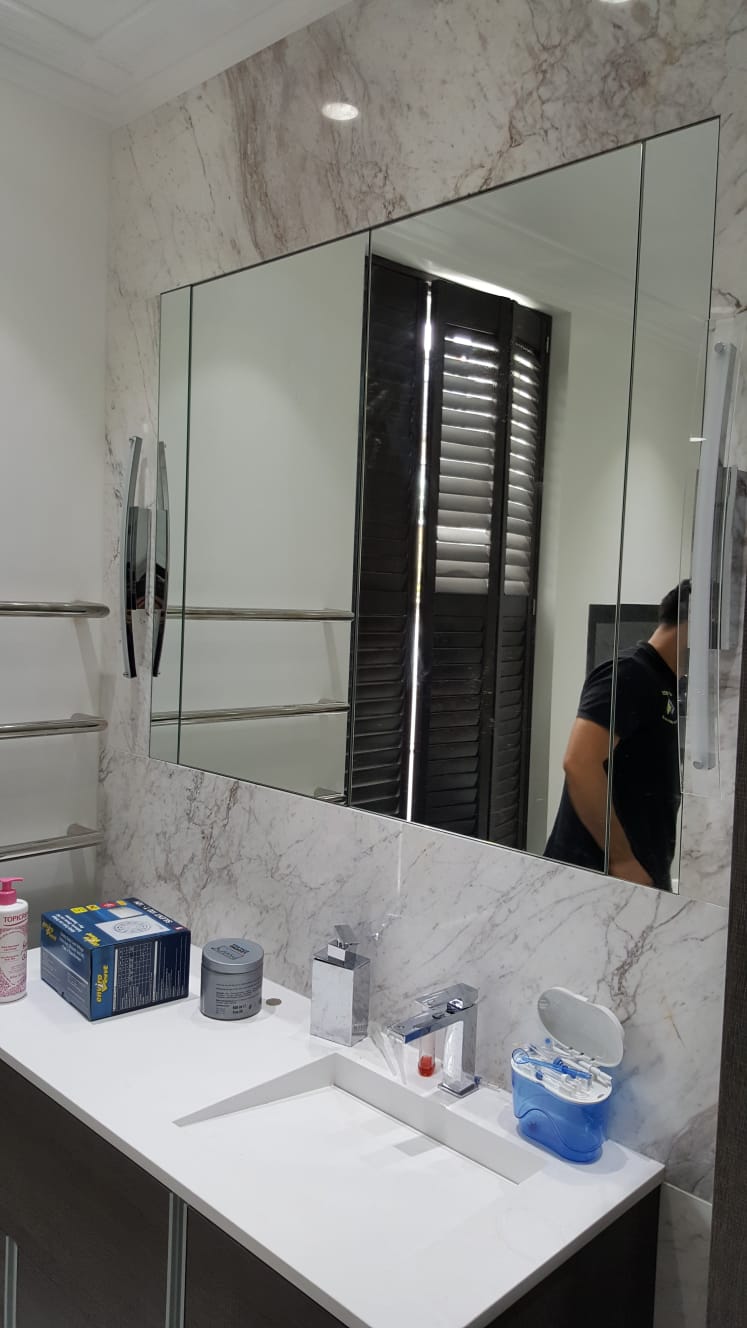
8. Keep water and cleaner away from the edges of a mirror
A mirror is glass with a reflective backing, and that backing corrodes from the edge inwards when moisture gets to it. The black creeping edge on an old bathroom mirror is exactly that, and there is no repair for it. Spray the cloth rather than the mirror, and never let cleaner run down into the frame.
9. Protect glass while building work is going on
Cement, plaster, grout and concrete run-off are alkaline, and left on glass they etch the surface permanently. If something splashes, wash it off straight away with plenty of clean water rather than letting it dry. Two more from the same list: do not leave protective tape or labels baking on glass in the sun, and do not let welding or grinding happen next to a finished pane.
The four things that mark glass for good
- Scratches, from pads, blades, rings and grit trapped in a cloth.
- Alkaline etching, from cement, plaster and grout left to dry.
- Hard water etching, from limescale left to build for years rather than months.
- Aggressive cleaners. Anything containing hydrofluoric acid attacks glass. It is what glass is etched with on purpose, and some products sold as glass restorers rely on it.
None of the four cleans off, because none of them is dirt. They are all changes to the surface itself.
Seals perish, hinges settle and a screen that once cleared its tray starts to drag. Check the hinges, the seals and the channel once a year: a seal replaced early is a small job, and a door that has been allowed to drag has usually damaged something else by the time anyone notices. We keep seals, hinges and channel at the counter, and you can see the range in hardware.
Buying glass rather than looking after it? Toughened or laminated, job by job is the choice that matters most.